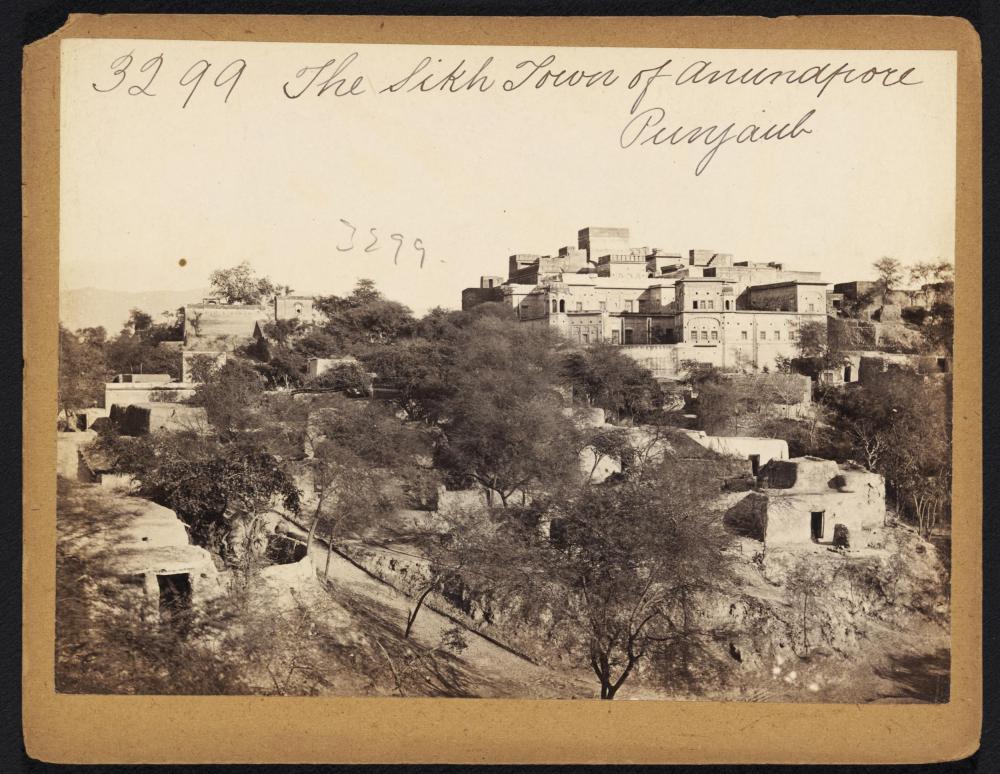
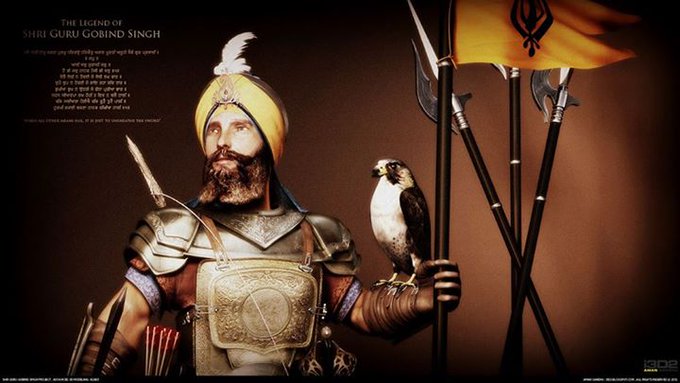
Part 2: Anandpur to Chamkaur – Exodus, Battle and Aftermath

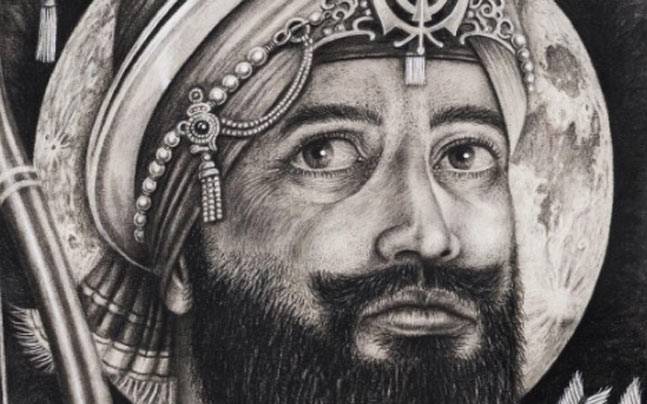
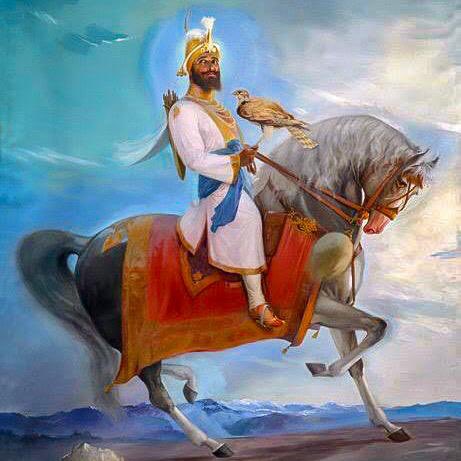
It’s an especially bitterly cold, rainy and wet December in 1704, when Guru Gobind finalizes his decision to evacuate Anandpur.  This resolve is not an easy one given waves of unrelentless enemy attacks, weakened state of his men (enfeebled from starvation due to the prolonged 8-month siege), and the unwavering resolve of Gur Sahib himself to rid the subcontinent of abject tyranny and subjugation of its rulers.  Evidently, Gur Sahib’s meteoric rise, his expanding popularity and growing political influence in the area, was very unpalatable and threatening to the ‘Pahari Rajas’ (Hill Chiefs of the neighboring principalities), and to Wazir Khan, the governor of Sirhind (a quintessential Mughal territorial center).  Therefore, to subjugate him, they repeatedly harass and ambush him (and his Sikh resistance), as witnessed by the battles of Bhangani (1688), Nadaun (1691), Guler (1696), Anandpur (1700 & 1701), Nirmohgarh (1702), Basoli (1702), 1st war of Chamkaur 1702), etc. 
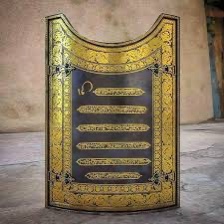
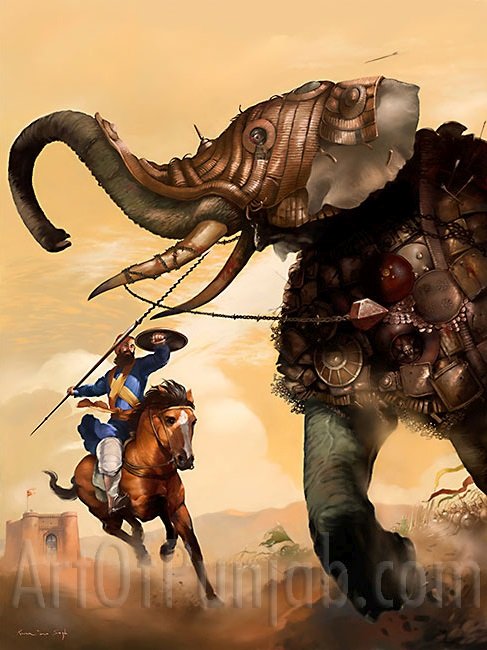
The final and full-on assault on Anandgarh Fort happened on May 20th, 1704. It was a formidable one!  A coalition enemy army, a million soldier strong, was assembled (contrived from a military alliance between Mughal forces from Sirhind, Lahore and Kashmir territories; troops of Pahari kingdoms from Kahlur, Kangra, Kullu, Kionthal, Mandi, Jammu, Nurpur, Chamba, Guler, Garhwal, Bijharwal, Darauli and Dadhwal; and tribesmen from Gujar and Ranghar tribes of Bajrur).  This gigantic army clearly had an unfair and disproportionate advantage; they began their assailment to annihilate the Khalsa bastion (about 4000 strong). Despite the enormity of the attack, the Khalsa were able to successfully engage and thwart all attempt of this herculean army. This tenacity, persistence and resoluteness of these unflinching defendants, led the syndicate to change their campaign to that of besiegement. Hoping to draw them out thru starvation, suffering and desperation, the burgh was barricaded, and all access to food & essential supplies were cut off. Simultaneously, they continued to provoke, hackle and exasperate them including unleashing an intoxicated elephant so that the Lohgarh gate, an iron gate of the fort, could be broken (that Bachitter Singh thwarted). Plus, capitalizing on Guru’s sense of honor, the Rajas falsely pledged their vow (that would allow Guru and his group to leave safely) on revered Hindu articles of faith (i.e., pious cow and ‘janeau’, the venerated thread). Gur Sahib fully aware that Pahari Rajas could not be trusted, demonstrated their insincerity (and fallacy of their oath) by masterminding a sham evacuation that was promptly attacked and plundered. Thereby exposing their true intentions and greed!

There were also calls for desertion and defection. The enemy publicized that whosoever rejected Sikh beliefs and proclaimed that they were not Guru Gobind Singh’s Sikhs, would be allowed to leave safely, unharmed! Some men from Majha, led by Mahan Singh, apprised Gur Sahib of this intention. Guru in return asked them to write and sign this ‘be-da’wah‘ (disclaimer of not being a Sikh). Upon receiving this deed, the Gur declared “From now on, you are not my Sikhs and I am not your Guru” and allowed them to leave. However, when they returned home, their women did not accept them and shamed them for their desertion and cowardice. Subsequently, they redeemed themselves in the ‘1706 Battle of Kidrana Lake’ (now Mukstar), where under the command of Mai Bhago, the great female general, they laid down their lives fighting valiantly for the Guru. Mahan Singh, breathing his last, begged Guru Gobind Singh for forgiveness, handed him the aforementioned ‘beda’wah‘, and pleaded to him to tear off that shameful statement (whereby allowing them to return to the fold of the Guru). Their martyrdom has a special place in Sikh annals as ‘Chalis Mukte’ (Forty Liberated Ones), and each time the Ardas (prayer of remembrance) is said, their sacrifice is recalled!
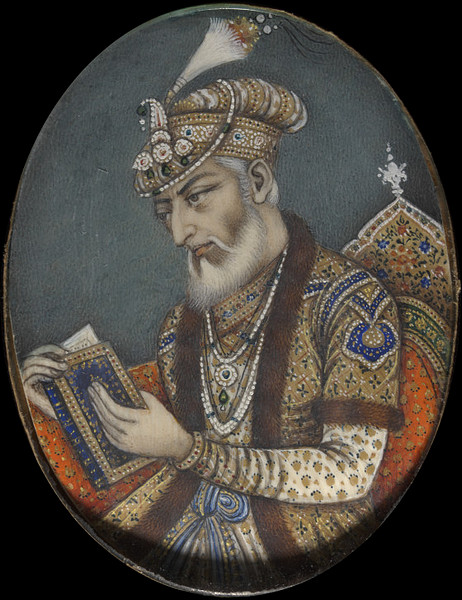
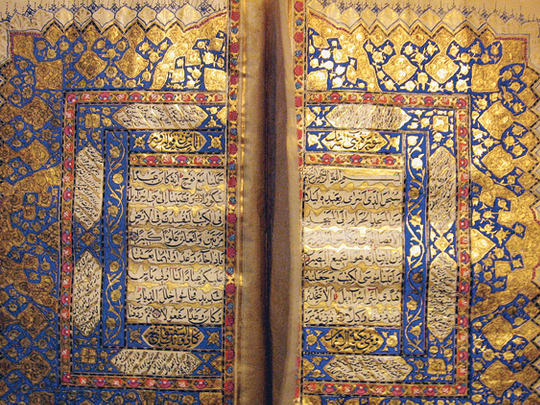
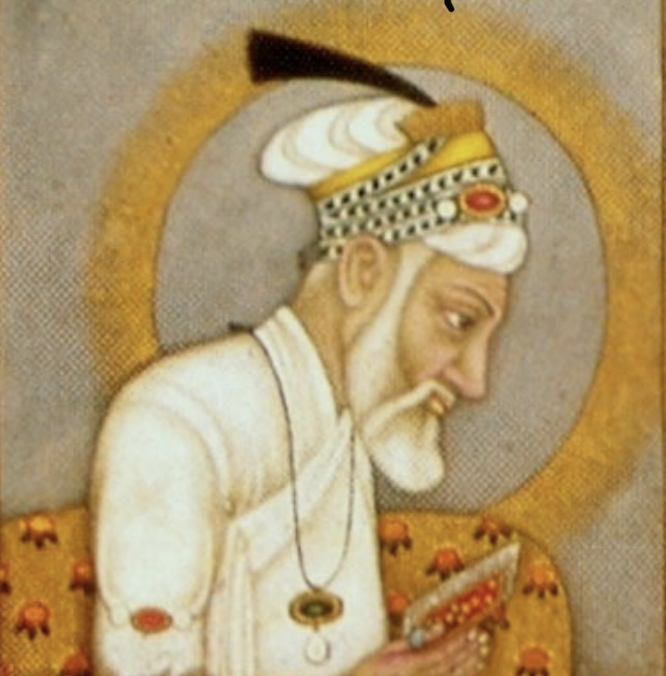
The eight months of beleaguerment concluded with the arrival of the ‘Shahi Parwan’ (a royal decree) from the emperor himself.  Inscribed and signed on the pages of the holy Quran, was the Aurangzeb’s covenant assuring protection and desire for a future meeting in Dina. Gur Sahib, compelled by the suffering and desire of his people, and against his better judgment and prudence, accepts this armistice.  Arrangements were made to evacuate the fort, heavy guns disbanded, certain weapons/equipment destroyed, and other relics and manuscripts burnt.  However, this consecrated pledge of the emperor, as envisaged by Gur Sahib, was also a ruse, a ploy and a cunning gameplay to draw them out.

This resolve to leaving Anandpur on December 20th is about to test the mettle, ideals and faith of Gur Sahib.  As soon as they left their bastion, they were pursued relentlessly by this huge opposing enemy.  At ‘Shahi Tibbi’ near Nirmoh (also called the Battle of Sarsa), a contingent of the Sikh armies engaged the armies of Wazir Khan and for three hours kept them at bay. Both sides suffered heavy casualties but it allowed the Guru and his retinue to reach the swollen Sirsa River.  Due to flooding, fast currents, and frigid temperatures (compounded by starvation and fatigue), few could only navigate the treacherous river. Even the Guru’s family got separated! Gur with his two elder sons (Ajit Singh and Jhujjar Singh) and 40 of his stalwarts, successfully maneuvered their horses and crossed the river.  Whereas, his two youngest sons (Zorawar Singh and Fateh Singh) and their grandmother (Mata Gujari), unable to traverse the creek, ended up in ‘Saheri’, the village of Gangu Brahmin, their trusted household cook.  So, with the imperial armies hot on their pursuit, the Guru’s entourage took refuge in a ‘Garhi’ (mud fortress) in Chamkaur (that was reknownrd for its strategic location).  This set stage for the epic battle (also called Chamkaur Di Garhi or Garhi Chamkaur Di), and it fulfilled Guru Gobind Singh’s famous proclamation- 

Chiriyan To Mein Baaz Laraun (I’ll Train the Sparrow to Fight the Hawk)

Gidran To Mein Sher Banaun (I’ll Teach Jackals to Become Lions)

Sava Lakh Se Ek Laraun (I’ll Prepare One to Fight Quarter Million)

Tabhi Gobind Singh Naam Kahaun (Then Only Can I Be Called Gobind Singh)

Guru Gobind Singh
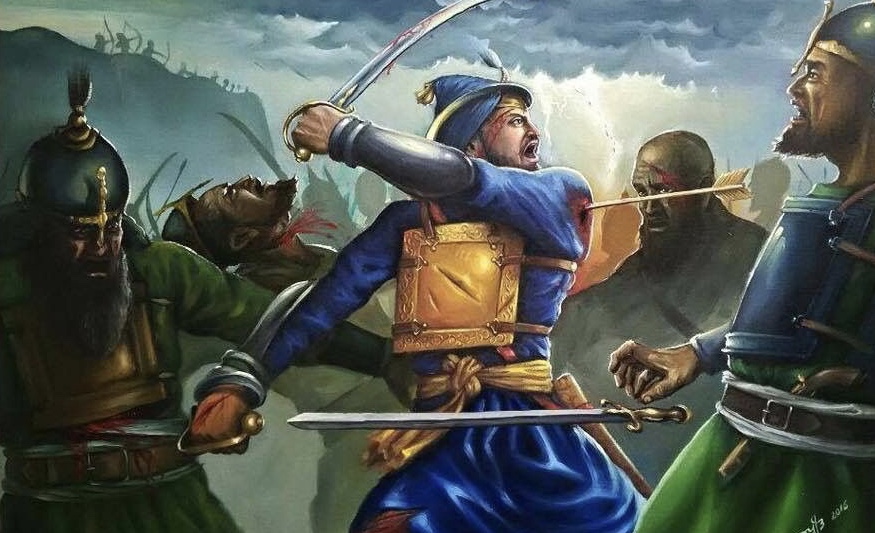


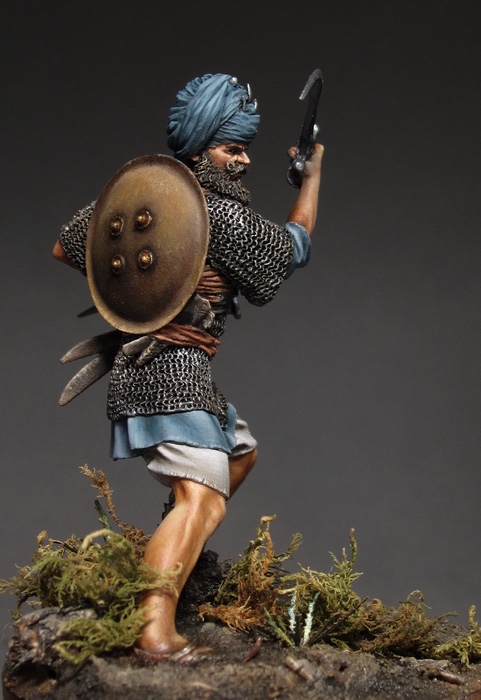
Against overwhelming odds, 43 surrounded by a million (yes, a million), every defendant knew death was inevitable! Also evident was that the ‘Garhi’ and its defenses would succumb under pressure of this imposing onslaught.  The Guru, already a warrior extraordinaire, a military genius and a meticulous war planner, readied his team for an intense combat.  He orchestrated and executed a well thought thru offensive that considered the weaknesses & limitations of the opponents, various types of weapons at hand, the diverse & advantageous tactical zones/areas, potency, energy & effectiveness of his fighters, etc. By daybreak, waves of five battle-ready and resolute stalwarts, despite ravaged and starved bodies, stuck enemy positions.  The element of surprise compounded by their lightning speed, military precision, purposive ferocity and unpredictability of the charge (from different directions), stunned the enemy.  This band of few, aided by Gur Sahib’s accurate and protective archery cover, wreaked havoc across enemy lines.  Plus, when the Sikh battlecry ‘Bole So Nihaal, Sat Sri Akaal’ (one who utters prospers, that timeless God is the truth), along with the salutation ‘Waheguruji Da Khalsa, Waheguruji Di Fateh’ (pure souls belong to God, and victory is always of God), reverberated in the air, stuck terror and paralyzed some enemy planks.  This strategy worked and this colossal army was not able to trounce them the entire day.  The valor, gallantry and resolve of the Khalsa was in full display, and not only did they die fighting till their last breath but caused heavy casualties across enemy lines.  Two outstanding and magnificent martyrs that day were Gur Sahib’s own children, his eldest sons – 17 years old Ajit Singh and 14 years old Jhujjar Singh.

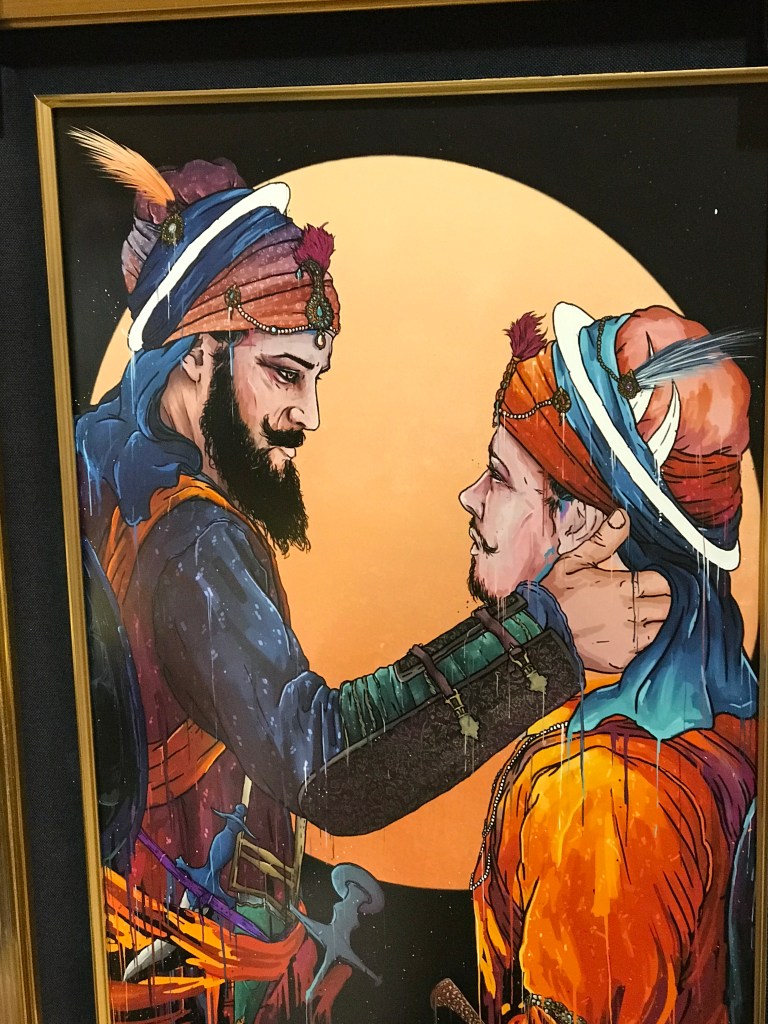
By nightfall, it was very evident that with only a handful of Sikhs left, that both the Fort and Khalsa defenses would fall the following day.  This is when the faithful invoked the covenant of ‘Panj Pyare’ or Five Beloved. This pledge of collective authority given to ‘Five Sikhs’ was specified by Guru Gobind Singh himself in the 1699 initiation of the Khalsa ceremonies.  While forming the new order, Gur Sahib declared “wherever five Sikhs of mine congregate, they shall be the highest of the high. Whatever they will do, will carry the authority of the Khalsa”, and this jurisprudence also applied to him as the sixth Khalsa initiate! Therefore, the Guru had to abide by the command and edict of the ‘Panj Pyare’ and they mandated him to leave Chamkaur, with the instructions to resurrect the Khalsa so that evil and depravity of the Turk rulers could be uprooted.  It is said that before leaving, the Guru Sahib announced his departure by bellowing “Sat Sri Akal” (Eternal God alone is the truth), blew out the torches of enemy camp via his precise arrows, and clapped his hands a few times and said “Peer Hind Rahaavat” (holyman of Hind is leaving). Eventually, when the adversaries took over the Fort, to their chagrin they were unable to capture the Guru – dead or alive!
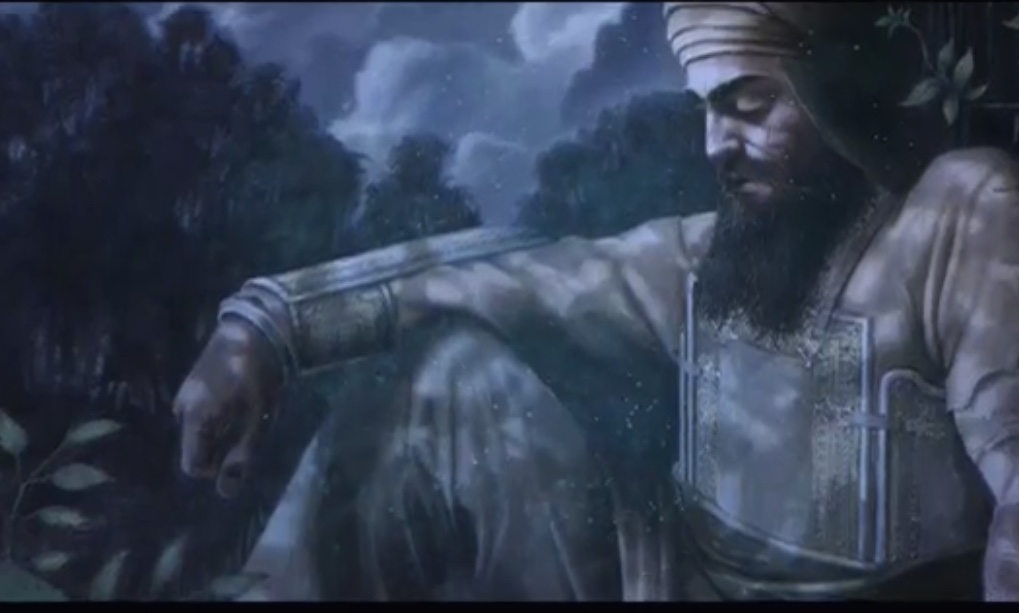

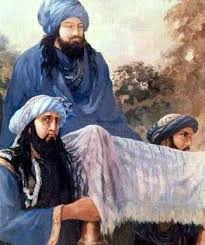
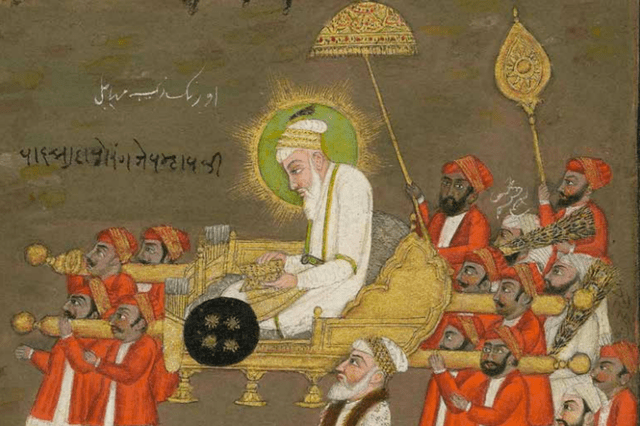
In the meanwhile, Gur Sahib slipped into the jungles of Macchiwara. While wandering there, he wrote one his very poignant shabad (hymn), ‘Mittar Pyare Nu, Haal Muridan Da Kehna’ (To my friend beloved, how do I state the condition/problem of your disciple), in which he expresses his gratitude to the Divine despite the suffering and hardships. As the Guru made his way to Dina (with enemy forces looking high and low for him), he was helped by two of his ardent Pashtun followers, Ghani Khan and Nabhi Khan.  They disguised him as the ‘Uch Da Pir’ (an exalted Sufi master) from Multan and carried him on palanquin, with the front manned by the Pathan brothers and the back by his followers, Daya Singh and Dharam Singh. Thus, they cleared all check-points and orchestrated the great escape! 
Taren Kaur’s rendition of ‘Mitra Pyare Nu’ Shabad
Nusrat Fateh Khan’s ‘Mittar Pyare Nu’ Shabad


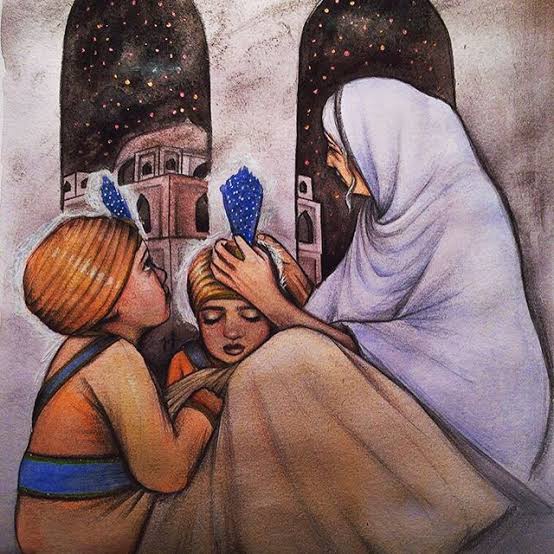
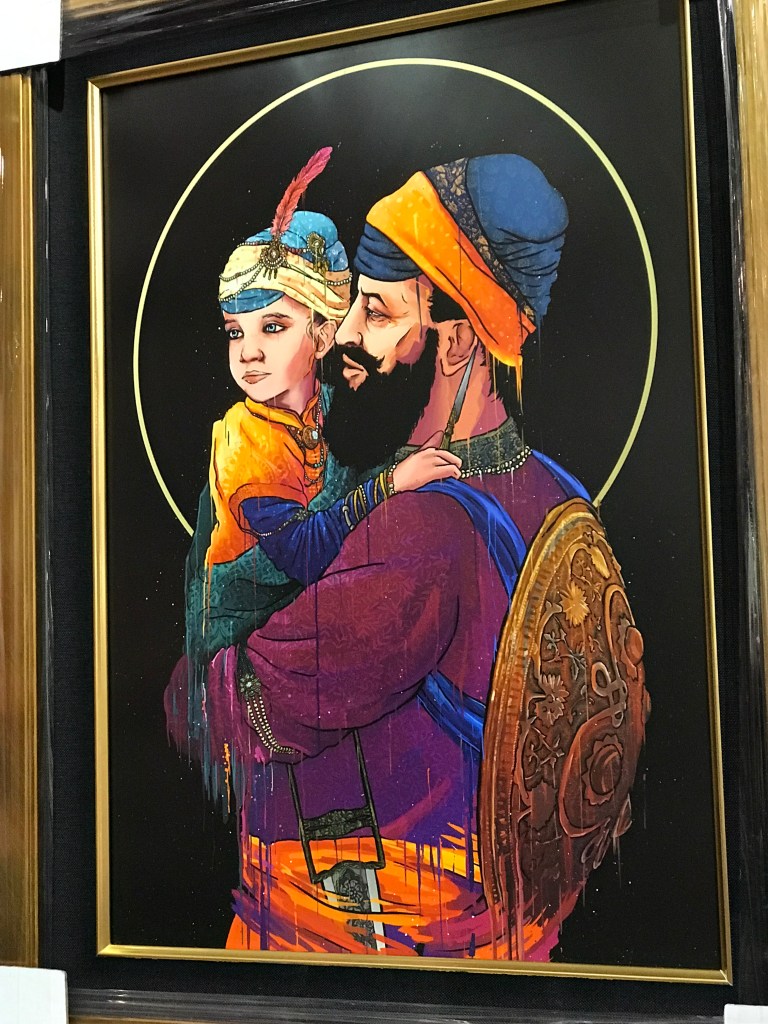
Meanwhile, unbeknown to the Guru, his mother (Mata Gurjari) and his two younger sons (8 year old Zorawar Singh and 6 years old Fateh Singh), who got separated from the larger group during the exodus out of Anandpur, were tricked into going to the village of ‘Saheri’ by Gangu Brahmin, their trusted household cook. Gangu deceived the family for a few gold coins and jewelry they were carrying (and for any Mughal bounty or awards this notoriety would bring). They were arrested and handed over to the Mughal Faujdar of ‘Morinda’ and eventually to Wazir Khan, the Nawab of Sirhind. In Sirhind, in the thick of winter, they were first imprisoned for seventy-two hours in an especially cold prison called the ‘Thanda Burj’ (Cold Tower) and thereafter the two minors were put on trial. Wazir Khan, having returned empty-handed from the battle of Chamkaur, wanted a full-on revenge! During the proceedings, the children were offered reprieve and gifts if they embraced Islam and converted into muslims. The children refused, and for their defiance, the tribunal ordered the children tortured and entombed alive!  It is said that Sher Muhammad Khan, the Nawab of Malerkotla, openly protested this callous, unjust and cruel punishment. Whereas, Diwan Sucha Nand, another courtier, persuaded the Governor to carry out the verdict by quoting a Farsi poem by ‘Firdaus’ that, snakelets will become snakes, wolf-pups will become wolves, and these children of the Guru are like the snake neonates who will surely grow up to become a serpent just like their father, thereby, no mercy be shown to them.
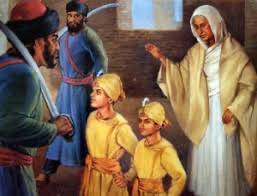
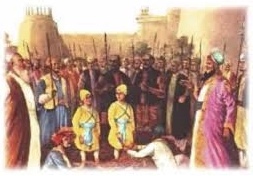
So with their fate sealed, on December 26th, 1704, they were then bricked alive! It is said that when the wall was being built around them, the ‘Qazi’ (priest) again offered to pardon them if they converted, but this offer too was spurned by the minors. In the end, the wall failed and the minors were executed with the sword. When the news of their death reached their grandmother (Mata Gujari), she breathed her last upon hearing of this savage and inhumane death that was inflicted upon these innocent children. So in a span of just a few days, Gur Sahib had lost his entire family. The news of their tragic and gruesome deaths (including his mother’s demise), reached him only when he reached Raikot. Rai Kalha, the muslim ruler of Raikot, was Gur Sahib’s ardent devotee and he dispatched a messenger to Sirhind to enquire about the family’s whereabouts. When the messenger returned with this agonizing news, Gur Sahib showed great grace, serenity and stoicism despite his unsurmountable loss and unimaginable grief. Here, he also prophesied the end of the Mughal empire and Turk lineage in India.

Coming Next Part 3: The Rebuke…
Part 1: The Zafarnama – The Truth that Shook the Mughal Throne

Satinder Sartaj ‘Zafarnamah’

With great curiosity and inquisitiveness, I listen to singer Satinder Sartaj’s newest release, ‘Zafarnama’.  I must applaud Sartaj for singing this legendary, celebrated, magnificent and multi-dimensional composition of Guru Gobind Singh so flawlessly.  Pièce de résistance for me is the integrity of this exquisite versification (and as penned by the Tenth Guru Farsi/Persian) that Sartaj was able to maintain. Plus the tone emanated the essence of this powerful and venerated letter that Guru Sahib sent to the Mughal Emperor, Aurangzeb.  For me, Gur Sahib’s fearless and resolute defiance of evil; reprimand of the emperor for tyranny & betraying his consecrated oath; eyewitness account of the fierce war of Chamkaur and its aftermath; his unequaled eminence despite his deep suffering, traumatic loss, and supreme sacrifice; all came thru. Zafarnama is an elegant, artistic and poetic and momentous play of words, by which Guru Gobind Singh passionately abjures tyranny, oppression, cruelty, subjugation, and injustice (which was prevalent in northern India during his time).

So what is this literary masterpiece? And what is the historical context in which it was written? For this to unfold we need to go back in history to circa 1705 AD. 

Aurangzeb, an aging orthodox Alamgir (emperor) has ruled India with an iron fist for five decades now.  In 1659, he came into power after a coup, a savage succession, that included deposing his father (Emperor Shah Jahan) and imprisoning him at the Fort in Agra; decapitating his much beloved elder brother and heir apparent (Dara Shikoh); and murdering rest of his other brothers. Although, considered a very austere, pious and reverent regent devoted to a very puritanical interpretation of Islam, he is a hardliner and very intolerant to any non-muslim or minority beliefs, doctrines and theology.  In his sultanate and rule, ‘Sharia‘ (Islamic law) was imposed; music, singing and alcohol was banned; and the ‘Jaziya‘ (a protection tax for non-muslims abolished from Akbar’s time) was reinstated. Plus, non-believers were meted with violent subjugation, discrimination, persecution and as well as coerced conversions.  Furthermore, it is during his reign that in 1675 AD, Guru Tegh Bahadur (the ninth Sikh Guru) and his devoted companions, were barbarically tortured and killed in a very macabre manner (for providing protectorship and security to Kashmiri Pundits who sought his refuge fleeing zealous & forcible religious conversions, and for his declinature of the emperor’s offer of conversion to Islam in order to spare him his life). The Guru was publicly beheaded, and his loyalists (while still alive and in front of the Guru’s eyes, to serve as a deterrent) were sawed into half (Mati Das), boiled in a cauldron (Dayal Das), and burnt wrapped in cotton-wool (Sati Das). The Guru gave up his life but not his principles (Sis Diya Par Sirr Na Diya), and for this noble altruistic sacrifice that protected the fundamental rights of mankind, Guru Tegh Bahadur is also called the ‘Hind-Ki-Chadar’ (Shield-of-India).

Now at the tender age of 9, Gobind Rai became the tenth Guru of the Sikhs.  Recognizing the abject fear that this heinous crime instilled in the hearts of the Sikh followers and when taunted by the emperor’s men, it precluded them from even identifying themselves as Sikh loyalists and to claim the slain body of their Guru so that proper funeral rites could be administered). This event, compounded by the rampant oppression and tyrannization that existed in the kingdom, compelled Guru Gobind to forever transform and change the path of the faith.  He had the premonition and foreboding that ridding the subcontinent of evil, depraved and immoral personages, would require minds that were disciplined and steady, detached and indifferent to death, devoted with limitless courage. He knew, and let known) that this would not be an easy path with his maxim, ‘Jin Prem Kiyo, Tin Hi Prabh Payo‘ (One Who Truly Loves, Realizes The Divine). He built upon the saint-warrior foundation laid by Guru Nanak, the First Sikh Guru, who chapioned honest and truthful conduct, ethical and principled living, and above all equality for all.

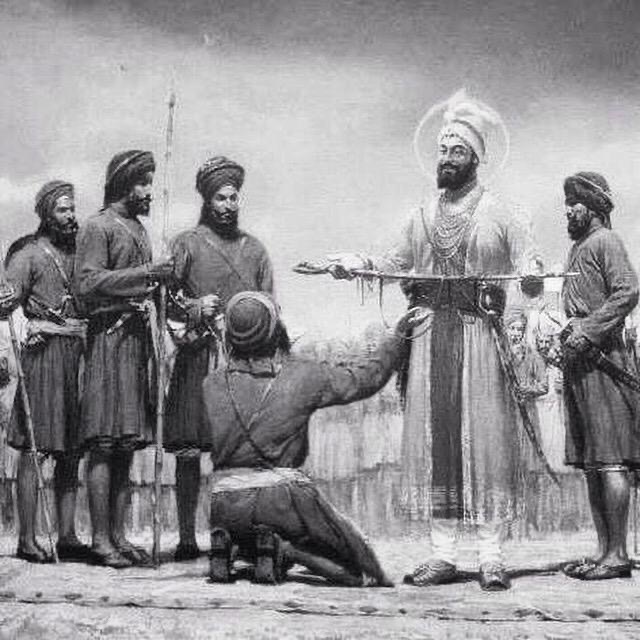
Consequently, during the harvest festival of Basakhi, Guru Gobind created a new Sikh Order, a new fraternity of soldier-saints, whom he called the ‘Khalsa’. He did this very dramatically! On 30th March 1699, he mandated all his followers to assemble at Anandpur Sahib, and at the peak of this revelry, he appeared with an unsheathed drawn-out sword, and asked for volunteers willing to give up their lives for the Guru. A sudden sullen silence engulfed the gathering. When the Guru repeated his demand, Daya Ram volunteered, and he was escorted into the tent. After some time, Guru emerged with fresh blood dripping from the blade, and asked for a second volunteer. In all, he did this for a total of five times. It concluded with the Guru revealing to the congregation, in flesh and blood, these five volunteers who demonstrated their staunchest devotion, loyalty and commitment (and the blood on his sword of an animal).

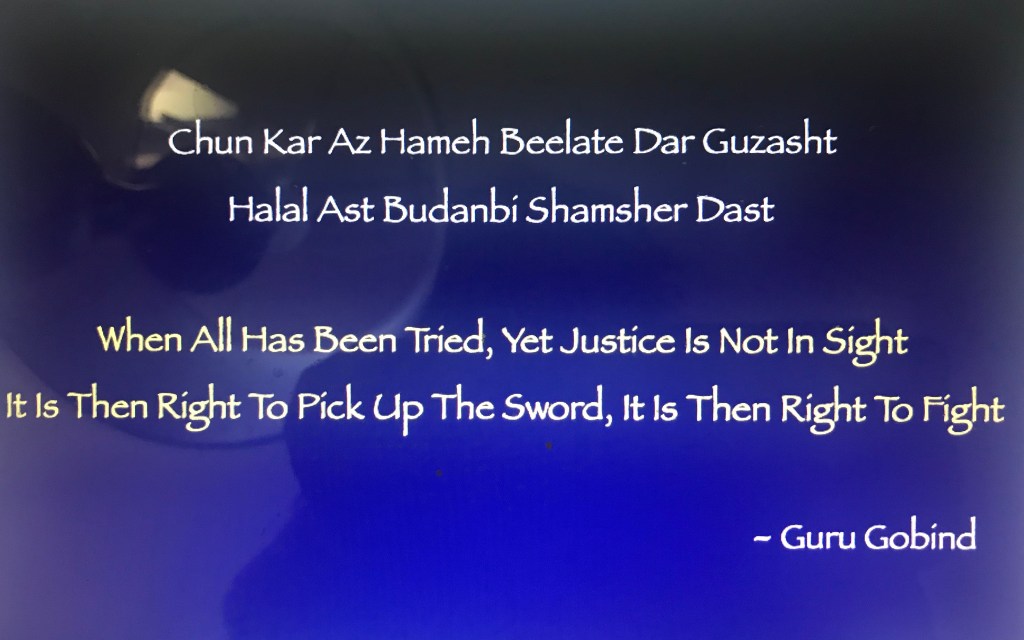
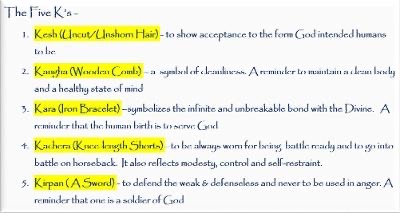
He called them the ‘Panj Pyare‘ (Five Cherished), and they were the first initiates into this new order of the Khalsa, who then in return baptized the Guru, as the sixth initiate, and he went from being called Guru Gobind Rai to Guru Gobind Singh. He also blurred the lines between Guru and the Khalsa (Khalsa is the Guru and Guru is the Khalsa, he recited), even interchanged/reversed them (Guru is also the disciple, Gur-Chela). During this ceremony, he gave the ‘council of five Sikhs’ (Panj Pyare) collectively the authority to dictate to all Sikhs and ordered that their their edict (Gurmatta) must to be obeyed. Plus, to build on the equality principles, all men were to be called ‘Singhs‘ (Lion) and women ‘Kaur‘ (Princess). The dress, articles of faith (including the 5K’s), scriptures, poetry, ballads, etc., were to make the Sikh stand out so that they intervene when any injustice is being carried out (and unable hide in masses), ensure battle readiness, adherence to the highest code of conduct, and the ability to make the ultimate sacrifice. To me, what sums the martial tradition is verse 22 of Zafarnama, where it makes reference to the sword, as an holy ferrous sacrament, to protect the weak, but only when all peaceful means have failed! And this is how Guru Gobind Singh took a minority religion and made them the best fighting force that world has ever seen.

Coming Next – Part 2: The Epic Battle of Chamkaur, Aftermath and The Rebuke…

References –

https://www.newworldencyclopedia.org/entry/Guru_Gobind_Singh

https://www.bl.uk/sacred-texts/articles/origins-and-development-of-sikh-faith-the-gurus

https://www.sikhmissionarysociety.org/sms/smsarticles/advisorypanel/gurmukhsinghsewauk/martyrdomtradition/

Two Pandemics: An Interesting Parallel (WW1)

There is no doubt that the current global COVID-19 health crisis is fluid, perplexing, dramatic, unsettling, paralyzing, and all-consuming; with countless images and data of people hooked up to ventilators or in body bags, healthcare workers & first responders in full PPE, (exhausted in some cases), deserted and empty streets, masked and gloved people and officials, rumors of shortages, etc., are omnipresent 24/7, in all news outlets, social media, concerned welfare calls, expert opinions and analysis, governmental or public health briefings, in unemployment numbers, in obstructed routines, etc.  Although some details are useful and informational, inspiring and even funny, but mostly forbidding, confusing, and conflicting! What’s confounding is the level of disruption, uncertainty, unpredictability and paranoia that prevails.  I wonder why our emotions are so heightened this time around?  Doesn’t the seasonal Flu kill more people annually?  What about more deadlier outbreaks like Swine Flu, SARs, MERs and Ebola, haven’t they become somewhat unmemorable & an illness of the past? It’s odd how we are indifferent and unconcerned to some maladies, yet so irrational and fearful of others?  Is it because its novel (no pun intended) & unfamiliar, and we haven’t developed any coping mechanism for? Or is it more innate and is triggering our reptilian brain and our instinctive survival mechanism?  Could it be even more primordial, perhaps it lays bare the cosmic truth about death, that we ultimately are not in control of how and when we die?

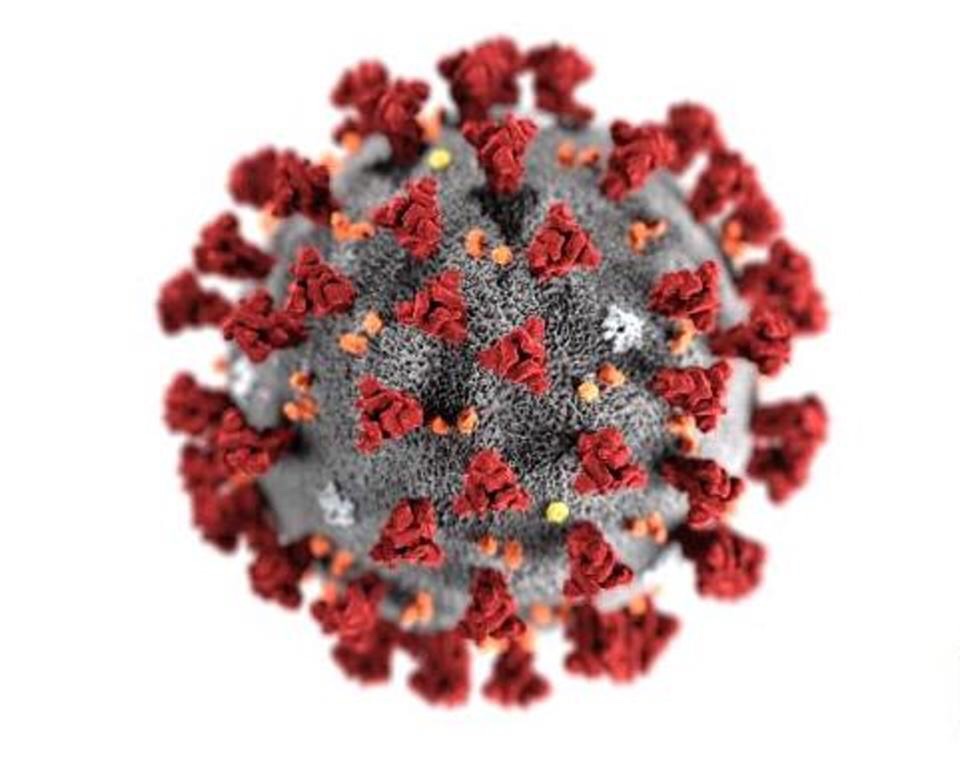
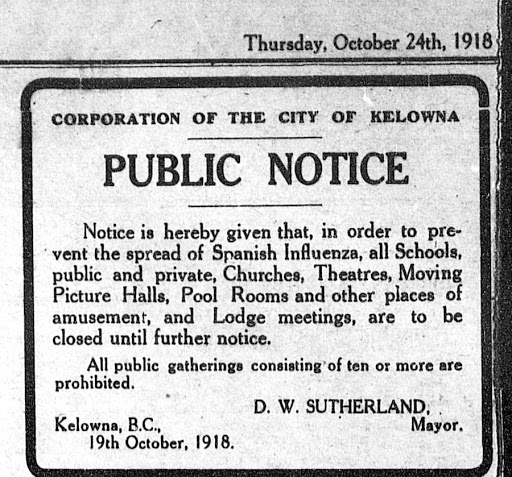
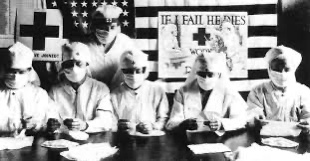
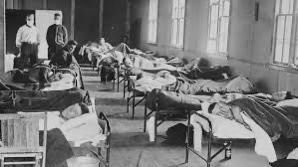
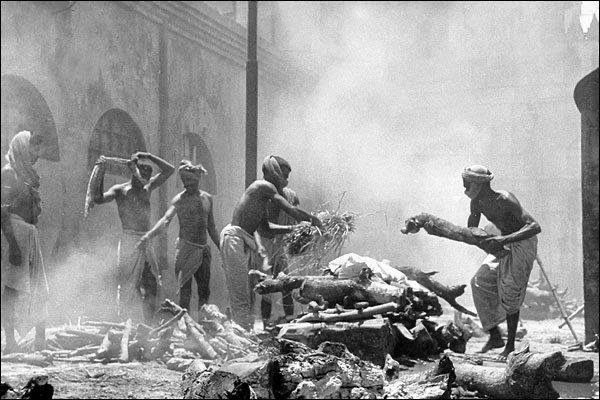
Also, what’s uncanny is the similarity that exists between ‘COVID-19’ crisis and the ‘Spanish Flu’ Influenza’ outbreak from only a 100 years back!  Both respiratory diseases (one coronavirus and the other H1N1) are so analogous that barring the period attire, one can easily swap pictures, posters and advice, and in my opinion one wouldn’t even know the difference!  Also, now overhearing my father, recount over the phone for his friends, the suffering from fall/autumn of 1918-19, as shared by Manji (his beloved grandmother who also lost her husband to this affliction within a short span of returning home to recuperate from the injuries to his spine that he sustained fighting in WW1), I hear him say, “Manji said there were so many deaths, when you returned from one funeral, the next funeral would be ready for cremation”.  I was stunned by this revelation and the poignant, sobering and soul-stirring picture these works painted, that are also so reflective of what we are seeing with the disturbing COVID-19 scenario!  Unfortunately that was the reality of the times and a common suffering, misfortune and depravity that many people and families share globally. I also noted that he called the infirmity ‘Katak di Bimari’ or ‘Illness of Katak’ (Katak, in Punjabi is the eighth month of the Desi calendar, 30 days long, with the first day falling on October 15th and the last day on November 13th), which my father later clarified that because there was absence of formal education and even lack of English language knowledge in the masses, perhaps Manji (and the locals) described this pestilence in Punjabi dialect which they were familiar & comfortable with, and one which made sense to them.  

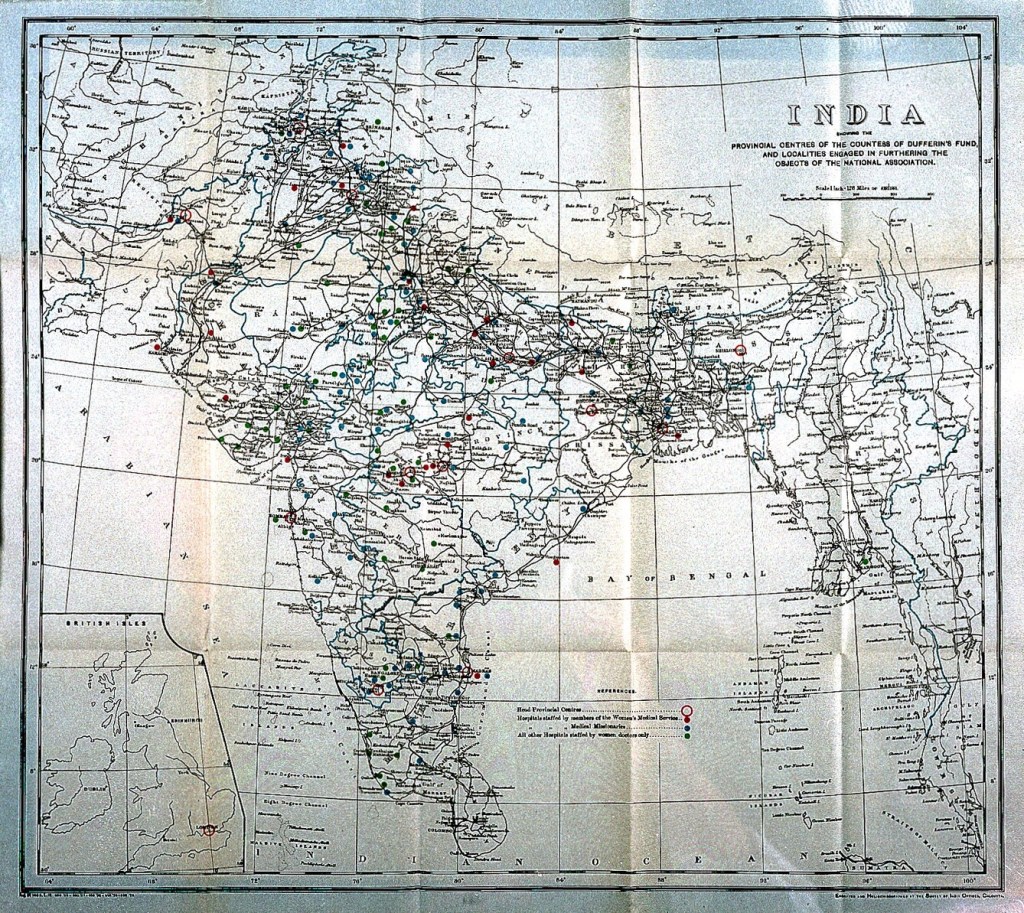
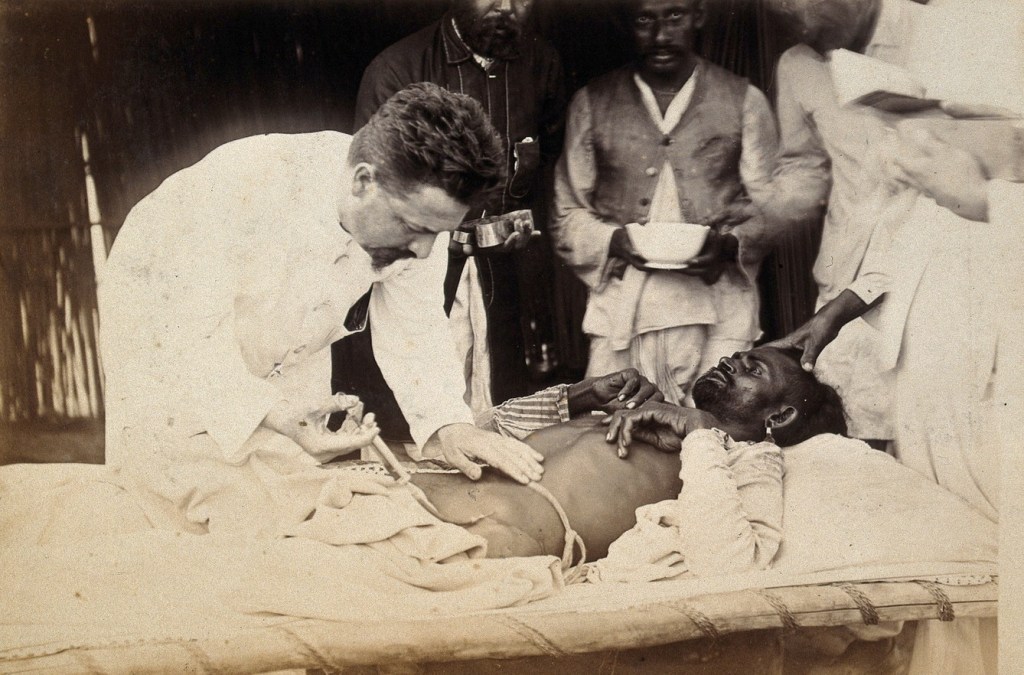
As I further my research into the perils of ‘Spanish Flu’ in India, I am finding that although it is very well pictorialized in the West, photos from Indian subcontinent was hugely lacking. This felt odd given that Indian deaths accounted for 1/5th of the 50 million deaths worldwide!  Also, India had a large contingent of soldiers in WW1 and in the epicenter France where this disease broke out, what was I missing?  I know experts called it the ‘forgotten pandemic’ and it certainly seemed true from the Indian experience. Also now that are read these two write-ups – 1) Arnold David’s paper titled ‘Death and the Modern Empire: The 1918-19 Influenza Epidemic in India’,  where he states that “the impact of the disease was overshadowed by the prior encounter with bubonic plague, by military recruitment and the war, and by food shortages and price rises that pushed India to the brink of famine”, and 2) Angana Chakrabarti’s article “102 yrs before COVID-19, India braved The Bombay Fever pandemic that killed over 10 mn’,  she calls ‘Spanish Flu’ ‘Bombay Fever’ or ‘Bombay Influenza’!  I wonder if the depravations that existed in colonial India were so grave that people didn’t see ‘Spanish Flu’ as a distinctive disease and also the various colloquial names used to describe the disease takes away from knowing the true human tragedy in India?  While we ponder on this, there is no doubt that Spanish Flu came to India in three waves (like the rest of the world), mainly – 

  1. The first wave manifested in May/June 1918 in the dock workers at the Bombay port.  It lasted about 4 weeks and devastated Bombay (or Mumbai) and which the local British health officer, J.A. Turner, professed at the time “it came to Bombay like a thief in the night” (Chakrabarti, 2020).  Symptoms reported were fever, bone pain, bronchial inflation, congestion, eye pains and a general feeling of malaise.
  2. The second wave, the most lethal & fatal, targeted young men between ages of 20 to 40 years old (of which my aforementioned great-grandfather was one of its fatalities), came to India and Punjab in September 1918 and lasted till December 1918.  
  3. The third and final wave came in 1919.

In closing, although it’s unknown with COVID-19, what the next few days, weeks or months are going to look like, or how it may show up in history’s storyline & timeline, I am confident in the human spirit and its resilience.  Also, history is witness that mankind has overcome many endemics, epidemics and pandemics, so certainly we will prevail over this too.  For now, please head the warnings of the experts, wash your hands, and stay safe.  

References –

Independence of India: Partition, Family Exodus and Being Refugees

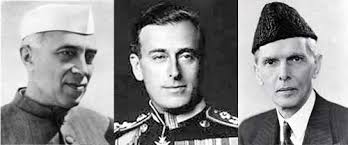
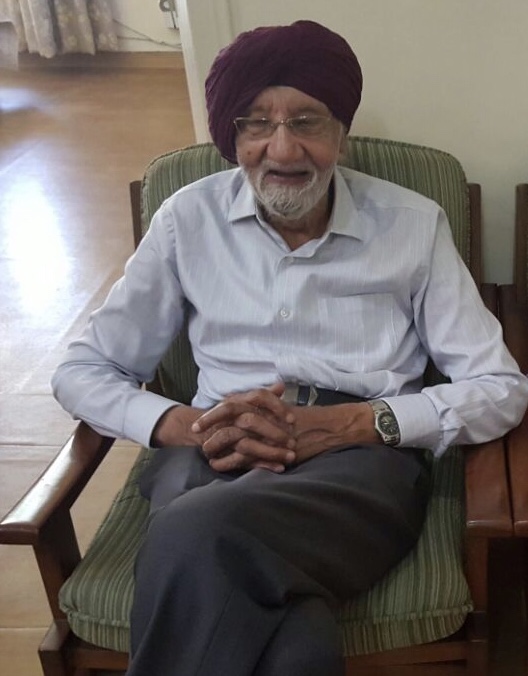
This weekend my father was interviewed for the ’1947 partition archive’ by Dr. Sufyan Siddiqui and his lovely wife Lindsay Eriksson-Siddiqui.  They were a delightful couple who came all the way from Denver to videotape my father’s recollections of life and events before-, during- and after- the partition of India, that saw the creation of two independent countries on religious lines (Muslim-Pakistan and Hindu-India).  Nehru Jinnah MountbattenThis decision to split India by the British (Mountbatten), Indian National Congress leaders (Nehru, Patel) and Muslim League (Jinnah) triggered one of the bloodiest upheavals and the biggest mass-migration of humans in modern times.  I characterize it as a unspoken genocide/holocaust, as growing up,  it was not something that was taught in the school curriculum, one didn’t see documentaries or shows pertaining to it, not much seemed to be written about it in popular media,  as a matter of fact neither did the government or national leaders talk of it.  However, it was omnipresent and always in the background of the families who went thru it and was often talked about to us by our grandparents regarding how life used to be before, the people, friends, customs, what they lost, the travel to India, the hardships, etc.  So, my family and I are very thankful to Sufiyan and Lindsay who volunteered their time and effort to document my father’s version of events that sheds light to a common misfortune both these countries suffered.   Amazing part for me was how much my father remembered given that he was a toddler of 4 years old at the time of partition, perhaps too you to recall the events.  In talking to Sufiyan & Lindsay, we realized that humans tend to remember traumatic events that they witness irrespective of age.  Although I will try to post the interview if allowed, in the meantime, following is what I was able to capture of his recollections –

Pre-Partition

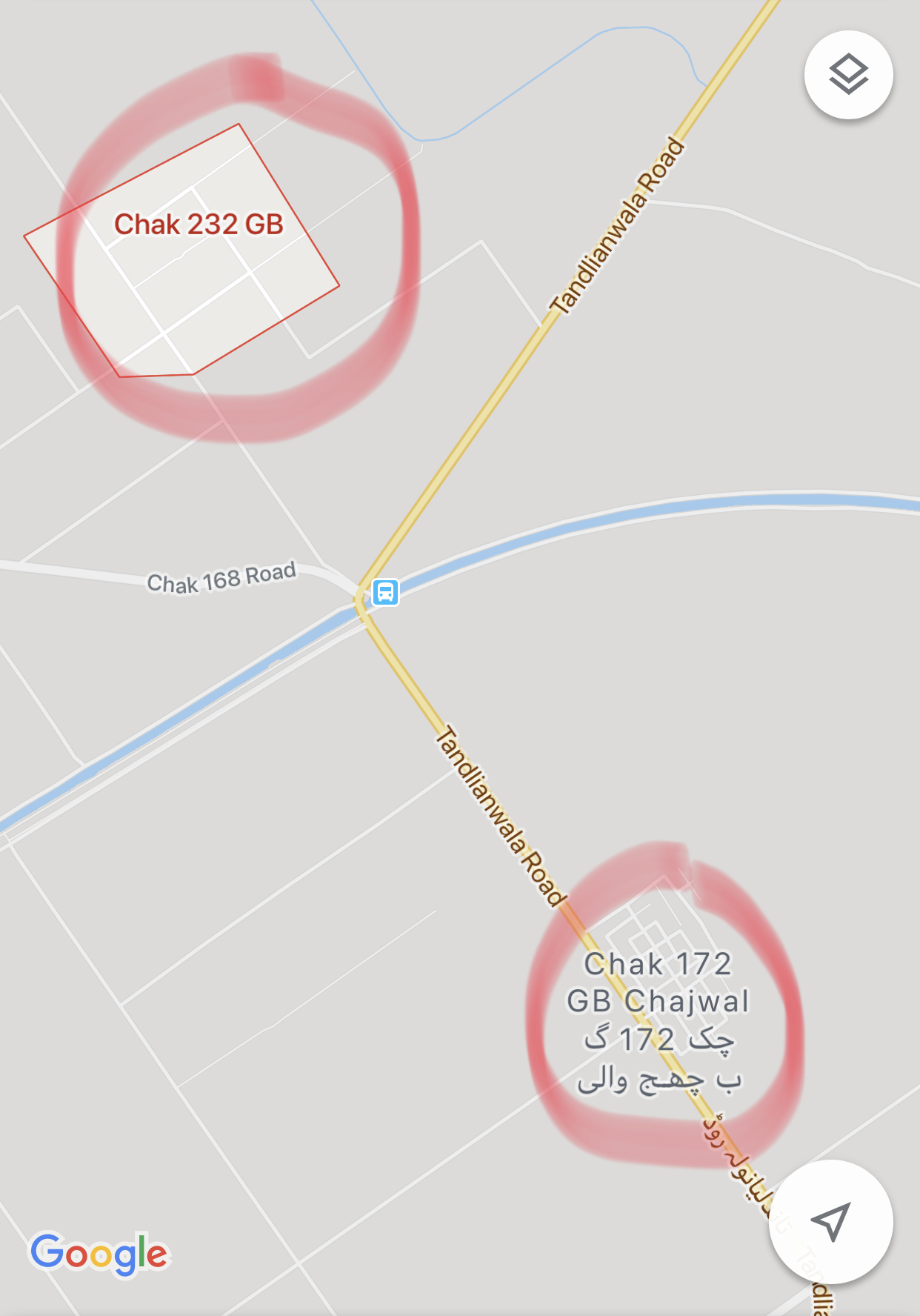
My father was born in the village of Chak 232 GB, Lyallpur in undivided Punjab.  His family consisted on his grandmother and matriarch (Ajaib Kaur), father (Ranjit Singh), mother (Mohinder Kaur) and two younger brothers (Sukhbir and Malkiat).   This village was a Sikh village, part of the canal colonies & composed mostly of ex-soldiers of the British-India armies.  The family had migrated there from Jagraon when his grandfather Subedar Indar Singh of 34th Royal Sikh Pioneers was awarded 5 Murabaas or 125 acres of land (He was a veteran of WW1 who participated in the German offensive on the western front and the Ottoman empire in Mesopotamia). 

He also remembered that his father bought land in the village of Chajwal (Chak 172 GB), a predominately Muslim village, where the family lived until they had to leave when it got too dangerous and unsafe for them.  He vividly recalled both homes- with the house in Chak 232 being ‘Kacha’ (mud construction), whilst in Chajwal (which was newer) had a ‘pakka diwan’ (cemented formal living area) and the rest was ‘Kacha’.  He remembers that the living area was elevated and away from the animal area, and they kept buffaloes for milk, oxen to plough the fields, and goat etc., at home itself.  There also wan as area for grain storage at home and that they grew wheat and cotton in their farms/fields.  He talked about being self-sufficient and didn’t have to buy too many things from the market including cloth/fabric (Khadar) for clothes was weaved at home by his mother and grandmother. Although he was not going to school, he remembered that the nearest school was 6 miles away in ‘Satiana Bangla’.  His fondest memory seemed to be that of a gramophone that served as entertainment for the villagers, where each night, his father would put it out and the whole village gathered to listen to the old records.  He remembered it to be a happy childhood where everyone supported and respected each other irrespective of their religious, political ideologies or economic status.  He fondly remembers the ‘Motbar’ or headman of the village whose name he did not recall during the interview and later remembered him to be “Nur Muhammad” who considered his grandmother to be his sister.  Another recollection that he remembered later on was that there was ‘Gernali road’ (or General’s road) that ran close the the village and was meant for the british, and on which he saw an occasional jeep once in a while, and was kept pristeen by a road roller.  The locals were not allowed on that road so the Indians travelled on a parallel road which was not as nice (that road now seems to be called ‘Tadlianwala road’ in the current map of that area!).

His recollection of when things started to heat up was when his father returned from Lyallpur (now Faisalabad), where there was a firing and from which he saved himself by hiding under the bus.  Upon his return back, he told the village elders that the tide is turning and time would come soon when they will all have to leave the village for good.  The elders didn’t believe him as they considered him too young to assess the situation!  It’s during this time, my father remembers going to the historical gurudwaras’ of Nankana Sahib and Panja Sahib where he recalled putting his hand in the imprint of Guru Nanak’s hand, as it was uncertain when and if they would ever return.

Partition
IMG_4219He recalled that things deteriorated fast after that.  He recalled the day the headman ‘Nur Muhammad’ came to Manji (his grandmother Ajaib Kaur) and said that things no longer are safe.  Although he guaranteed them that none of the villagers would harm them but could not vouch for folks outside the village (which he was hearing of).  Manji asked how much time would they have to pack up?  He told that they just had 30 minutes, and that he will accompany them right to up to the canal and would ensure that get safely into Chak No. 232, the Sikh village.  To their bad luck the wheels of the ox-cart were removed for greasing, so they could only take whatever they could grab and carry in their hands (which was not much), and that Nur Muhammed kept his word and only left when they were safely inside Chak 232.
Per my father’s recollection, the first attack on the village was by ‘Janglees’ (the local jungle folks/nomads) who came beating the ‘dhol’ (Indian drum) and were being led by a leader who was dancing on the mule.  This attack was thwarted by the ex-soldiers who fired and shot the leader that scattered his followers.  However, the attacks on the village kept mounting and my father clearly remembers that women were instructed to kill themselves by jumping from a tall building (and not be captured alive in case the defenses of the village fell).  He also remembers his grandmother’s panic as during one of the attacks he got separated and hid, and her refusal to go into safety unless he was found!  He was eventually located when the curiosity of a child got him to peek outside to see what was going on and someone spotted him.  Eventually the decision was made to leave for India to Dhilwan on the river Beas.

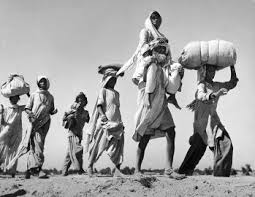
imagesThis was done in two ways, one where young women, children, elderly and handicapped went via a truck, and that is how he travelled with his mother and two younger siblings.  It took them 5-6 hours to travel to East-Punjab.  The route they followed was along the ‘Grand Trunk road (GT road) and went thru Lyallpur, Lahore, Amritsar, Jullundur and Beas, and my father remembers that there was excitement in the air when they reach ‘Balloke Headworks’ a dam site, on their route to India.  Along the way my father remembers seeing some dead bodies, some shot, some decaying!  The other was via a ‘Kafila’ (caravan) of ox-cart, horses, etc. that carried household items and that is how his grandmother and father came (they agreed to bring an ox-cart for someone provided they could also take their stuff, given they were not able to bring their ox-cart in their hurry to leave Chajwal).  It took them over 3 months to reach Dhilwan given the slow nature of ox-carts to move.  In the meantime, there was no news of them until one day news came that the ‘Kafila’ had reached the village and that is how they reunited as a family.

Here he also remembered an enduring memory that is etched in his brain.  Apparently, to get to Dhilwan from Beas (where the truck dropped them), this stretch needed to be done on foot.  However, they were told that a large Muslim Kafila has encamped on the side of the road and it would be safer if they went via the bus.   My father remembers seeing this large caravan resting before it could resume its journey towards Pakistan, however, this was the monsoon period in the subcontinent with the torrential rains deluging the landscape, and as a result the Beas river started to swell.  At night time, my father remembers hearing the people’s shrieks as they were being swept away by the flood waters!  Another vivid story that he remembered during this time was that the floods which was chest high also caused food shortage.  He remembers that one of the shopkeepers was stockpiling rice, sugar and soda (washing detergent) intended for the black market, which he refused to sell or give to these starving refugees.  Only when the flood water started seeping into his storage area, he made a deal to split whatever they helped save 50/50.  This is what got them thru these days where they ate raw rice mixed with sugar to survive!

Post-Partition 

Once the family reunited, the arduous task of re-settlement began.  The decision was made to move to the village of ‘Badhni Kalan’, which was my father’s grandmother’s parental village and where she had some land on her name.  They first moved in with some of her extended family members (given she was the only child) and these relatives really welcomed them.  Next came to decision to acquire their own dwelling, so it made sense when it was suggested that being refugees, they take over a house that was abandoned by a Muslim family who relocated to Pakistan.  One such house was located which belonged to a teacher by the name of Sher Muhammed.  Only problem was that it was being used for storage by the ‘Jan Sangh’ group, a local Hindu political party!  When approached, they reluctantly agreed but told them to return the next day to get possession.  However, upon their return the following day, they found that there was no one to receive them and hand them the key, instead the house was bolted shut and sealed from inside by a layer of bricks.  My father recalled that then his hot-blooded uncle broke the lock, scaled the house, got inside and opened all the doors, and that is how they got possession of the house.  Also, this was pre-dominantly a Hindu neighborhood so they did not want Sikhs to move in, as they thought they will be rowdy and misbehave with their women, so each night thereafter they would congregate and hold demonstrations outside their house.  They even got a police constable to come each night but to the family’s good luck they had a relative at high police post in Moga (the neighboring town) so none of the police constables intruded.  This was also a time when a huge tragedy and setback happened for the family.  His father got admitted to the hospital due to Typhoid (apparently a doctor told them they were refugees and did not have much money, so their best bet is to go to the hospital) and during this time his one-year brother Malkiat got dysentery and he died from it.  This news was kept from the father for a few days until he started to ask for him.  My father recalls witnessing his grandmother crying profusely, covering her face so no one can see her grief, and took the body for burial (as infants were buried as opposed to cremation).

My father said it took them about 6 months to get used to of their new environs.  He remembers fondly starting school here where first the instruction was done in Urdu and quickly changed to Gurmukhi.  He remembers his teacher very fondly (although he didn’t name them all, but they were Chajju Ram who was his first grade teacher, Uttam Singh his math teacher who loved his grandmothers Dahi-Bhalla, Channan Singh, Gajjan Singh his english teacher, Mal Singh his punjabi teacher and Sant Singh his second grade teacher who was extremely near-sighted and one knew they were in trouble when he looked up from reading his book and hooked his walking stick to bring a student closer), who all although strict were excellent teachers.  He proudly remembers being the monitor of his class from grade 1 to 8 and how he ran the school store, and he was loved by everyone because he was so responsible!  They eventually moved to the town of Moga for higher secondary education (where the family made a house) and went on to Ludhiana for his college education.  He remained a good student throughout!

He eventually joined the Indian Air Force and where he rose to the rank of Air Commodore (Brigadier General) as a navigator.

In closing, I am so proud of my father as his achievements are all his own and gained thru great hardships and perseverance.  What amazes me is that he remains humble, grounded and reverent, and doesn’t let the ghosts and setbacks of the past hinder him in anyway.  He is one of the most positive person I know and I am very lucky to have him in my life.  I also want to take a moment to acknowledge all the families on both sides of the border who also endured and overcame such hardships.  And to the citizens of both Pakistan and India who are celebrating their respective Independence days on August 14th (Pakistan) and on August 15th (India) to take the time to remember, honor and pay homage to these families and our shared history that saw 12-14 million people displaced from their homes & the refugee crisis it created, over 2 million that lost their lives, countless that became orphans or went thru great autocracies.  They are our unsung heroes and we need to acknowledge that his violent partition is an important chapter of our combined histories.  And for those who may have forgotten or don’t know the impact, the following youtube video captures the time and sentiments beautifully.

Other sites to explore-

https://www.facebook.com/1947PartitionArchive

https://www.1947partitionarchive.org/

https://en.wikipedia.org/wiki/Partition_of_India

An Ancestor in the Second Anglo-Sikh War: The Raja of Ladwa

m2

I forgot to finish my previous post regarding my ancestor’s sister and brother-in-law.  Earlier in my blog, I had shared that it was during my great-aunt’s (Sirdar Dewa Singh’s sister’s) wedding to Raja Ajit Singh, the Regent of Ladwa (also written Ladva), that my great grandfather came into distinction.  I now want to expand on what became of this great uncle (the Raja), his wife (my great aunt) and the Riyaset (Kingdom).  I promise it’s’ riveting stuff and one that makes history exceedingly real!

‘Ladwa state’ in essence was the territory around Thanesar in Haryana, which was acquired by Raja Gurdit Singh. a close confidant of Maharaja Ranjit Singh (being from the same clan, village & ’Karoringhia Misl’).  Later on around1764 the village of Baddoval (near Ludhiana) was also given as a ‘Jagir’ to him by Maharaja Ranjit Singh, as part of the conquest against Mughal Sirhind.  Eventually his son, Raja Ajit Singh, succeeded him to the throne, and he was recognized as the ‘Regent of Ladwa’ by George Eden, 1st Earl of Auckland, the then British governor-general of India.  And like his father, Raja Ajit Singh continued to remain a staunch ally of Maharaja Ranjit Singh & supported his various campaigns of conquests, and for which he continued to receive favors from him. 

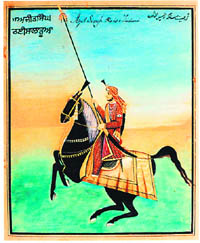
Then in 1839, upon Maharaja Ranjit Singh’s demise, the East India Company set sights to annex his wealthy kingdom.  This let to the first ‘Anglo-Sikh’ war (which was fought between 1845 and 1846 in Pheru Sheher, Moodkee, Sobraon and Chillianwallah) where Ajit Singh fought on the side of the Sikhs and against the British.  He and Ranjodh Singh Majithia (a famous general), not only seized the forts of Fatehgarh, Dharamkot, Baddoval, but also entered Ludhiana cantonment where they set the barracks on fire!  However, on January 28th, 1846, during the ‘Battle of Aliwal’ the Sikhs suffered defeat and Raja Ajit Singh fled the battlefield.  His actions and support of the Sikh cause was considered to be treason against the British, so his Kingdom and estates were confiscated, and his wife (our great aunt) arrested and imprisoned at the Govindgarh fort.  He eventually was captured in Allahabad, and during his captivity, he orchestrated yet another escape and was never captured again by the British. He is considered the only Raja who helped the Sikh cause below the Sutlej, so I would safe to say that he perhaps was amongst the first freedom fighter in Punjab.

PS- You can read more about him in the following article- http://www.anglosikhwars.com/battle-of-buddowal-21st-jan-1846/.  Also, some interesting youtube post on ‘BBC Celebrity Antiques Roadtrip programme’ about some article from anglo-sikh wars https://www.youtube.com/watch?v=33L9N8-BGQI&feature=youtu.b

The Festival of ‘Hola Mohalla’


Each year, I hear about the festival of ‘Hola Mohalla’ from my Chachaji from ‘Pind’ (village).  His fervor and eagerness to go to Anandpur Sahib to partake in the festivities and set up for the ‘Langar Seva’ (selfless service as a free kitchen), plus the photos that I have seen of the jubilation and revelry intrigues me to not only attend it one day, but also is very reminiscent of a bygone era!  It also invokes great reverence for the 10th guru, Guru Gobind Singh, who was getting ordinary Sikhs physically and mentally ready to take on a mighty Mughal Army and challenge its emperor Aurangzeb, who was conducting unimaginable and bloodcurdling autocracies.  The quote of Guru Gobind Singh’s that comes to mind is “chirian te mein baaz ludaun, gidran to mein sher banaun, sawa lakh se ek ladaun, tabe Gobind singh Naam kahaun’ (only shall I be called Gobind Singh, when I train the sparrow to fight the hawk, I turn jackals into lions, and I make one Sikh fight a legion of hundred thousand’).  I feel if I was there I would invoke the spirit and presence of the guru himself!

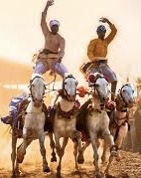
So what is this festival ‘Hola Mohalla‘?  It is a three-day martial arts festival which is held annually during spring time, in Anandpur Sahib, the day after ‘Holi’ (the festival of colors) is celebrated. So this year Holi falls on March 21st, so Hola Mohalla will be celebrated March 22nd to the 24th! Some say that the word ‘Hola’ is a masculine variant of the word ‘Holi’, but the best explanation I found is by Bhai Kahan Singh, who points that the world ‘Hola’ is derived from the word ‘Halla’ (pronounced Hul-la) which means to attack, to assault or to descend upon, while the term ‘Mohalla (pronounced Ma-halla) stands for an organized parade or procession.  So together, it means the ‘the charge of the cavalry or armies’.  This makes sense given that the Sikhs and Nihangs gather to display their valor and prowess in a militaristic manner, and the festivities include demonstrations of swordsmanship, fancy foot works, ‘Gatka’, horsemanship, tent pegging, bareback horse riding, etc. Also battlefield mastery is demonstrated thru mock battles & combats.  Although all this are from a bygone era, the essence of the festival is ‘bravery’ and a reminder to that Sikhs that they are soldier-saints who have a duty to protect and honor the helpless and downtrodden.  


Honoring My Mamaji: Gursharan Singh Grewal

photo-2019-01-25-15-57-17Last Sunday night came the news that Mamaji Gursharan passed away.  Although this is a shocking and sad news, but knowing that he’s returned back to our maker (to a better place away from the pain and suffering of this physical plane) is comforting.

How do I pay homage to this larger than life Uncle?       He was an extremely accomplished and dynamic human being.  Born on 19th November 1930, at home in the ‘Kila’ in Gujjarwal, he was 3rd of seven sibling (with my mother being the youngest and 15 years his junior).  He finished his FSc from Government College Ludhiana, and went to Punjab Engineering College Roorkee (which later relocated to Chandigarh), where he graduated as a ‘Civil Engineer’.  I remember him sharing that this was a time when even the engineering students got assigned butlers’ (a legacy pf colonial India!).

His first job was the construction of the ‘Bhakra Dam’, where he worked under Harvey Slocum, a renowned American civil engineer and dam-building expert (famous for building the Grand Coulee Dam in Oregon).  Bhakra Dam was called the “New Temple of Resurgent India” by the first Prime-minister of Independent India and freedom fighter, Mr. Jawaharlal Nehru.  His career also took him to Ghana and Iraq, where he helped these governments/companies with irrigation, dam and/or canal building/management expertise.  He retired as the Chief Engineer of Punjab.

As I write this blog, an ‘Akhand Path (continuous prayers)’ have commenced.  Although I can’t be there for his final ‘Antim Areas and Bhog’, I want to commemorate him, this amazing man, my beloved Mamaji.  I love you Mamaji, and one day we will all meet again in the ethereal plane.  Till then God Bless and ‘Shabba Khair‘. Continue reading “Honoring My Mamaji: Gursharan Singh Grewal”

The Raj, Wars and My Paternal Ancestors…


This slideshow requires JavaScript.

Last month was special.  I came across some of my ancestor’s military service documents, commendations, awards/medals, etc., for the empire days (majority of which didn’t survive partition of India and the great migration that ensued in 1947).  I was most excited about two notable documents – First, being a 130 year old enlistment certificate from the reign of Queen Victoria of my great great grandfather Sawan Singh, and second, a WW1 commendation certificate of my great grandfather Indar Singh signed by Sr. Winston Churchill (the then secretary of war). This month we also celebrate the 100th Armistice Day marking the end of World War One.

It reviewing the documents, it appears that on October 5th, 1888, my great- great- grandfather Sawan Singh enlisted in the ‘34th Sikh Pioneers’, an infantry assault regiment of the British-Indian army. I remember Manji (my great grandmother) telling us that Babaji Sawan Singh had a very long and illustrious service, that he was a Subadar-Major (which is the highest rank an Indian could attain in the Imperial armies at that time), and that he was awarded a land grant of 5 Murraba (125 Acres) in the village of ‘GB Chak No. 232’ in Lyallpur district (now in Pakistan).She also talked about all the memorabilia he brought from his various deployments, especially the Chinese storage boxes (Sandooks) and Peking Silk that had to be left behind during the hasty migration of 1947.  My research shows that some of his deployments would have been ‘relief of Chitral’ (1897), ‘Tirah Campaign’ (1897-1898), China ‘relief of Peking and Tientsin’ (1900-1901) following the boxer rebellion, etc.

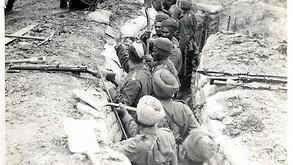
Indar Singh, my great grandfather, also followed in his father’s footsteps and enlisted in the 34th Sikh Pioneers.  During the ‘Great War’ of 1914-18, his regiment (part fo the 3rd Lahore division) was first deployed on the Western Front and winning the battle honors of Festubert, St Julien, La Bassee, Armentieres, Givenchy, Neuve Chapelle, Ypres, France and Flanders, and then moved to the Middle East in the Mesopotamia Campaign where he fought against troops of the Ottoman Empire.  Manji used to mention that he showed great bravery in the battlefield, and despite being wounded himself, carried his commander to safety.  He returned home shortly thereafter as a war-casualty, and later succumbed to his injuries at home, during the month of ‘Kata’ (Punjabi month that straddles October/November), in 1918 during the deadly ‘Spanish Influenza’ outbreak.  Although Manji was pregnant with my grandfather when he passed away (so he never got to see his son).  Manji stated that he was tall (6’ 4” or 6’5″), good looking, and also a Subadar-Major like his father.  She would also talk about her wedding (she being his second wife), going to Ambala Cantt (the base of his regiment) where he was stationed as a Jamadar-Adjutant (which she pronounced Jamadar-Jitten).  She also shared of her good relations with his first wife Rattan Kaur and her stepdaughter Kamal Kaur (my father also remembers Bhauji Kamal Kaur very fondly).

Although these artifacts & stories made me aware of their rich lives and legacies, it also makes me wonder how they would have been in person.  Although history may not give them the proper dues, I for sure have a greater appreciation, respect and awe of their bravery, sacrifices, and courage.  I salute them and honor their DNA that runs thru my veins.


Manji, Our Matriarch…


My great-grandmother Ajaib Kaur, whom we lovingly called ‘Manji’ (pronounced maa-jee), was our hero.  She was not only loving and kind but also brave and respected by all.  Although her life was tough, she never complained of her hardships, challenges or restrictions, which were many, including, loosing her husband early from injuries sustained during WW1;  loosing everything (home, farm, livestock, family, friends, etc.), becoming displaced, ferrying a bullock-cart with her son (my grandfather Ranjit Singh) for over three months thru dangerous carnage of 1947 partition of India, and starting a new life as a refugee with nothing; becoming paralyzed on the entire left side of her body in the early 70’s rendered her house-bound and with mobility challenges, till her passing in 1991; etc.

She practically raised my father and he in return has great love, respect, devotion, adoration, and reverence for her.  He has very fond childhood memories of her including how she would be worried and look for him whenever he would run late from his errand of bringing ‘pathe’ (fodder for the cattle), and how he could spot the light from her lantern in the field; how she told him stories of the Gurus – their glory and sacrifices; how she was strict regarding studies; how she made the best ‘dahi-vada’ that even his teachers would ask for (and how he had to make a special run home to bring it them on days Manji made them); how she was immense respected in the village that everyone irrespective of age called her ‘Bhua’ (father’s sister); etc. My memories of her is seeing her happiness each time we visited her, and how talked to us, gave us her wisdom, allowed us to groom her, and play with her rustic wheelchair (sometimes with her in it).

What we know of Manji is that she was born in Badhni Kalan village near Moga (where the family also settled after partition) in the Dhaliwal Clan to Nidhan Singh (date of birth and mother’s name unknown).  It is said that a ‘Gwad’ named ‘Dhana Pati’ in the village was named after her father (‘Gwad’ or ‘Pati’ is part of the village where people of the same clan live).  She was married to my great grandfather Inder Singh and was his second-wife and bore him a son (my grandfather Ranjit Singh).  Babaji Inder Singh is believed to have succumbed to his injuries around 1934-35 during the  ‘Kate Di Bimari’ (plague epidemic) in Punjab.  

In closing,  Manji was a woman of grit, strong values, and faith.  She was steadfast, disciplined, clear-headed, committed, realistic, resilient and responsible, who believed in honest work, strengthening family bonds/connections and enduring relationships. She was a wise woman who everyone went to for advice, direction and reassurance.  We, her descendants, not only thank her for her dedication, perseverance and steadiness, but also for being a strong role-model and inspiration to how to live life with resolve and tenacity despite life’s challenges and setbacks.  Thank you Manji for everything and we all love you.

God, does He/She really exist? (Part 1 of 3)


Discussion this week with my father was particularly very intriguing, stimulating and thought-provoking.  We talked about God consciousness.  Does God really exist? Why is Sikhism there are numerous names for the Divine despite the belief in one supreme God ‘EK Omkar’ (who prevails in everything)?  Has anyone seen It/Him/Her (including Prophets, Gurus, Sages or even any mortal)? etc.

In the foundational Sikh prayer, the ‘Mool’ or ‘Mul’ ‘Mantar,’ the nucleus of Sikh beliefs, he shared that our first teacher Babaji Guru Nanak, simply and poetically rendered this prayer upon realizing the Divine (and that all Sikh scriptures including ‘Guru Granth Sahib Ji,’ ‘Japji Sahib’ have the ‘Mool/Mul Mantar’ as a foundational prayer so that Sikhs can first learn, understand, live and embody the ‘Mool/Mul Mantar’ and remain in reverence of the Almighty).

Mool/ Mul Mantar –  Ek Omkar, Satnam, Karta-Purakh, Nirabhau, Nirvair, Akal-Moorath, Ajooni, Saibhang, Gurparsad, Jap!  Aad Such, Jugaad Such, Hai Bhee Such, Nanak Hosee Bhee Such. 

(by Shivpreet Singh)

Translation–  All pervading infinite spirit, Truth is Its name, Creator of everything, Fearless, Inimical to none, Immortal/Timeless, Unborn, Self-illuminated, he can obtained thru courtesy of the Guru, Meditate/ remember him! True in the beginning, True thru all the ages, True even now, Oh Nanak, It is forever True.

We further discussed that although we Sikhs believe in One Supreme God (Ek Omkar), who prevails in everything, however, there are numerous and multitude of names to call the divine (Just in Babaji Guru Gobind Singh’s Jaap Sahib there are approximately 900 names for God.  We don’t how many exist in ‘Guru Granth Sahib,’ in ‘Japji Sahib,’ ‘Gutka,’ ‘Pothian,’ ‘Nitmen,’ etc.


Next – Part 2 : Has Anyone Really Seen God?


PS –  A noteworthy post that I found very interesting was by Mr. Brijdeep Singh,  titled ‘Mool Matra, Fountain, Spiritual, Temporal Wisdom’,  available at: https://sikhsailor.wordpress.com/2010/05/16/mool-mantra-fountain-spiritual-temporal-wisdom/. This is a very wonderful and intensive spiritual, metaphysical, scientific and temporal interpretations of the Mool/Mul Mantar did with lot of love and ‘Bhakti’.  Thank you Veerji Brijdeep Singh Ji.