


Each year, I hear about the festival of ‘Hola Mohalla’ from my Chachaji from ‘Pind’ (village). His fervor and eagerness to go to Anandpur Sahib to partake in the festivities and set up for the ‘Langar Seva’ (selfless service as a free kitchen), plus the photos that I have seen of the jubilation and revelry intrigues me to not only attend it one day, but also is very reminiscent of a bygone era! It also invokes great reverence for the 10th guru, Guru Gobind Singh, who was getting ordinary Sikhs physically and mentally ready to take on a mighty Mughal Army and challenge its emperor Aurangzeb, who was conducting unimaginable and bloodcurdling autocracies. The quote of Guru Gobind Singh’s that comes to mind is “chirian te mein baaz ludaun, gidran to mein sher banaun, sawa lakh se ek ladaun, tabe Gobind singh Naam kahaun’ (only shall I be called Gobind Singh, when I train the sparrow to fight the hawk, I turn jackals into lions, and I make one Sikh fight a legion of hundred thousand’). I feel if I was there I would invoke the spirit and presence of the guru himself!
So what is this festival ‘Hola Mohalla‘? It is a three-day martial arts festival which is held annually during spring time, in Anandpur Sahib, the day after ‘Holi’ (the festival of colors) is celebrated. So this year Holi falls on March 21st, so Hola Mohalla will be celebrated March 22nd to the 24th! Some say that the word ‘Hola’ is a masculine variant of the word ‘Holi’, but the best explanation I found is by Bhai Kahan Singh, who points that the world ‘Hola’ is derived from the word ‘Halla’ (pronounced Hul-la) which means to attack, to assault or to descend upon, while the term ‘Mohalla (pronounced Ma-halla) stands for an organized parade or procession. So together, it means the ‘the charge of the cavalry or armies’. This makes sense given that the Sikhs and Nihangs gather to display their valor and prowess in a militaristic manner, and the festivities include demonstrations of swordsmanship, fancy foot works, ‘Gatka’, horsemanship, tent pegging, bareback horse riding, etc. Also battlefield mastery is demonstrated thru mock battles & combats. Although all this are from a bygone era, the essence of the festival is ‘bravery’ and a reminder to that Sikhs that they are soldier-saints who have a duty to protect and honor the helpless and downtrodden.


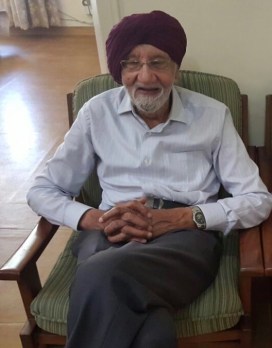 Last Sunday night came the news that Mamaji Gursharan passed away. Although this is a shocking and sad news, but knowing that he’s returned back to our maker (to a better place away from the pain and suffering of this physical plane) is comforting.
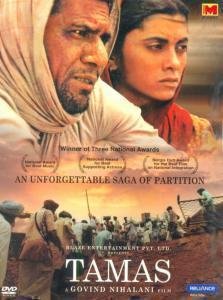 Then in 1988, came this 10-part miniseries called ‘Tamas’, directed by Govind Nihalani (based on a 1974 novel of Bhisham Sahni of the same name). This TV film depicted the 1947 partition of Punjab that resulted in Sikh-Muslim-Hindu genocide (part of India’s independence from Great Britain that saw the creation of Pakistan). This series had a profound and deeply transformational effect on me. Not only was I exposed to certain truths and circumstances, I realized that what I thought to be my grandparent’s folktales was in fact my family’s story and reality (how they had to leave all their possession in a haste and start a new life in India-Punjab with not much to their name). I understood the family’s (and punjabi people’s) deep loss, suffering and true grit that got them thru this ordeal and transformed them as people, culture and clan, and grasped how I was part of that fabric and needed to honor their bravery and sacrifices.

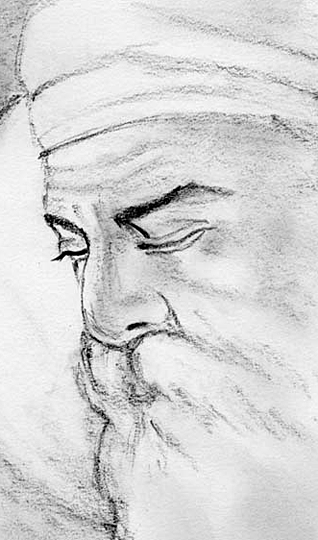


 LEGACY OF LIONS